



Let’s be real: planning a gay vacation used to be simple. You’d pick a Pride festival, book an overpriced hotel room that smelled vaguely of poppers and regret, and call it a day. But gay travel trends in 2026 hits differently. We’ve moved past the “just happy to be here” phase and entered our “this better be worth the PTO” era.
The decision-making process has shifted dramatically. It’s no longer just about where the party is; it’s about where we are: physically, emotionally, and politically. We’re weighing safety against visibility, cost against experience, and asking ourselves if standing in a three-hour line for a watered-down vodka soda is actually “culture.”
This isn’t another listicle telling you to visit Mykonos (we know, you’ve been). This is a breakdown of how gay travel decisions are actually being made right now and what you need to consider before you book your next escape. If you’re looking for what these shifts actually look like on the ground, we also pulled together a guide to gay travel ideas for 2026 that reflects how people are really planning trips right now.
TL;DR
- Intentionality is king: Gay travel in 2026 is value-driven; we’re prioritizing connection over chaos.
- Politics plays a part: Safety, local laws, and cultural welcome now shape destination choices as much as the nightlife scene.
- Timing is everything: Shoulder seasons are the new peak seasons as travelers dodge heat, crowds, and price gouging.
- The “Big Event” shift: While circuit parties exist, many of us are trading massive blowouts for smaller, intimacy-focused gatherings.
- Fit over hype: The smartest trips this year optimize for personal vibe, not just Instagram clout.

How Gay Travelers Are Choosing Destinations in 2026
Remember when we used to pick destinations solely because a cute guy on Scruff said he was going? We’ve evolved. In 2026, the question “Where should I go?” has been replaced by “Is this worth it?”
As Emily Keogh, founder of Palm Insights, notes in her 2026 Emerging Travel Trends Report, “Travel is entering a new era defined less by escape and more by transformation… Travel decisions are fast becoming identity decisions. Purpose isn’t peripheral anymore; it drives choice.”
And she’s not wrong. Decisions today are rarely based on popularity alone. Instead, we’re seeing a massive shift toward “emotional return on investment.” If we’re spending thousands of dollars and burning precious vacation days, we want to know we’re going somewhere that actually wants us there, not just our pink dollars.
We’re weighing the sense of welcome against the price tag. It’s the difference between a city that tolerates us for a weekend parade and a destination where we can hold hands at dinner on a Tuesday without getting the side-eye. Travelers are increasingly prioritizing destinations where queer joy feels indigenous to the culture, not imported for a festival.
From bucket lists to fit
The concept of the “must-visit” list is dying. Just because Ibiza is iconic doesn’t mean it fits your vibe in 2026. Many of us are realizing that fighting for a sunbed at a beach club isn’t actually relaxing. We’re choosing “fit” over “fame,” picking spots that align with our specific interests, whether that’s food, architecture, or simply sitting in silence without hearing a whistle blow every four seconds.
Timing Matters More Than Destination
If you’re still booking trips in the dead center of peak season, you’re doing it wrong. The smartest gay travel trend in 2026 isn’t where we go, but when. Shoulder season travel is no longer just a hack for budget travelers; it’s the primary strategy for anyone who wants a decent experience.
As Brian Kelly, Founder of The Points Guy and an out gay traveler himself, notes, “Instead of flocking to crowded, expensive cities, Americans are embracing shoulder-season trips and seeking more unique, affordable, and nature-focused destinations. With economic concerns top of mind, they’re planning strategically and spreading the travel love throughout the year…”
He’s not wrong. Plus, climate change means traditional summer hotspots are becoming scorching hellscapes by July. Who looks cute sweating through a linen shirt in 90-degree heat? Nobody. We’re seeing a migration to April, May, September, and October. The crowds are thinner, the locals are less exhausted by tourists, and the prices don’t make you want to cry.
Rethinking Pride travel
Let’s talk about the elephant in the room: Pride travel. We love a parade, but visiting a city during its Pride celebration is often the worst time to actually see the city. You get inflated prices, impossible dinner reservations, and barricades blocking the best views. In 2026, more gay travelers are visiting iconic gay cities two weeks after Pride. You still get the queer infrastructure and the bars, but you actually have room to breathe.

Safety, Politics, and the New Reality of Gay Travel
We can’t talk about gay travel trends 2026 without talking about the political landscape. It’s not alarmist to say that the map looks different than it did a few years ago; it’s just practical.
Safety isn’t binary anymore. It’s not just “safe” or “dangerous.” It’s contextual. We’re looking at domestic travel with the same scrutiny we used to reserve for international trips. A state line can now mean a massive difference in healthcare access or legal protections.
However, we aren’t stopping travel; we’re just traveling smarter. There is a distinct difference between “community presence” and “tourist welcome.” Some destinations might have restrictive laws but thriving, welcoming underground communities. Others might be legally safe on paper but feel culturally hostile on the street.
Reading between the headlines
Travelers are getting better at reading the room. We’re looking for nuance. We’re choosing destinations where visibility is possible, while still respecting local contexts. In certain regions, discretion is coming back into style, not out of shame, but out of a desire to experience the world without making ourselves targets.
The Shift Away From “Big Blowouts” (But Not Away From Fun)
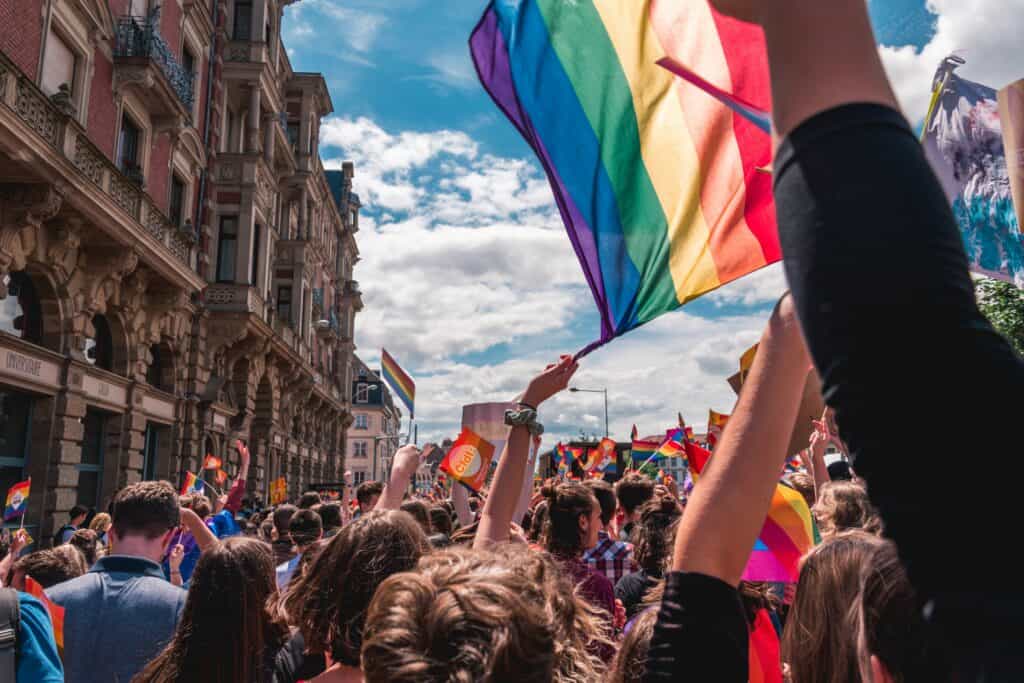
Don’t get it twisted. The circuit party isn’t dead. If you want to dance shirtless with 5,000 of your closest friends, you can absolutely still do that. But in 2026, the “Big Blowout” is no longer the default setting for gay travel.
Look, event fatigue is real. Between the eye-watering costs, the claustrophobic crowds, and the fact that every DJ seems to play the exact same circuit remix, we’re collectively exhausted. That’s why we’re seeing a massive shift toward “social travel.” These are smaller, curated group trips centered on things like hiking, food, wine, or wellness instead of just chasing the loudest bass drop.
Connection is competing with spectacle. Many of us are realizing that screaming over techno music isn’t the best way to make friends. We’re favoring smaller bars, local scenes, and dinner parties over massive stadium events. It’s about finding community, not just finding a crowd.
What replaces the party?
Does this mean we’ve become boring? Hardly. It just means the definition of “fun” has broadened. We’re seeking experiences that feel unique to the destination. Instead of spending 12 hours in a dark club that looks the same in Berlin as it does in Brooklyn, we’re prioritizing experiences that we can actually remember the next morning.
What’s Actually Changed Since Pre-2020 Travel
If you’re trying to recreate a trip you took in 2019, stop. The world has changed, and so has the gayborhood.
Prices have recalibrated, and expectations have shifted. The tolerance for chaos is significantly lower. We used to tolerate a lot of nonsense, such as bad service, dirty hotels, or canceled flights, just to be part of the scene. In 2026, we want a better return on our time and money.
Gayborhoods themselves are evolving. In many cities, the “gay area” has dispersed. The nightlife isn’t concentrated on one street anymore; it’s woven into the fabric of the city. This means our travel patterns have to change, too. We can’t just book a hotel in the “gay district” and assume everything is within walking distance.
Nostalgia can mislead planning
Trying to chase the ghost of a past vacation is a recipe for disappointment. The dive bar you loved might be a condo now. The cheap drag brunch might be $80 a head. Gay travel in 2026 is about meeting the moment where it is, not where we wish it was.
Conclusion
Gay travel in 2026 isn’t about chasing the hot new trend. It’s about understanding what you actually need from your time off. The best trips this year will align your timing, your values, and your desire for genuine connection. The industry has matured, and frankly, so have we.
Use this framework as you plan travel in 2026, rather than treating it like a checklist. Explore our gay city guides, seasonal planning tools, and firsthand tips to build trips that actually fit how you travel now.
About the Author
Mike Sheridan is a hospitality expert, educator, and co-founder of Fagabond, with a doctorate in Education and a well-earned skepticism of industry jargon. A former hotel general manager and revenue manager, he brings years of experience in tourism, destination marketing, and countless hours in hotel back offices. A seasoned traveler who often spends months on the road, he approaches gay travel with a blend of academic insight, real-world experience, and a dry sense of humor.
Learn more about Fagabond and our contributors on our About Us page.