


Editor’s Note: Updated for the 2026 DC Cherry Blossom Festival, this guide reflects the latest peak bloom timing, events, and how Washington, DC’s LGBTQ nightlife and neighborhoods have evolved in recent years.
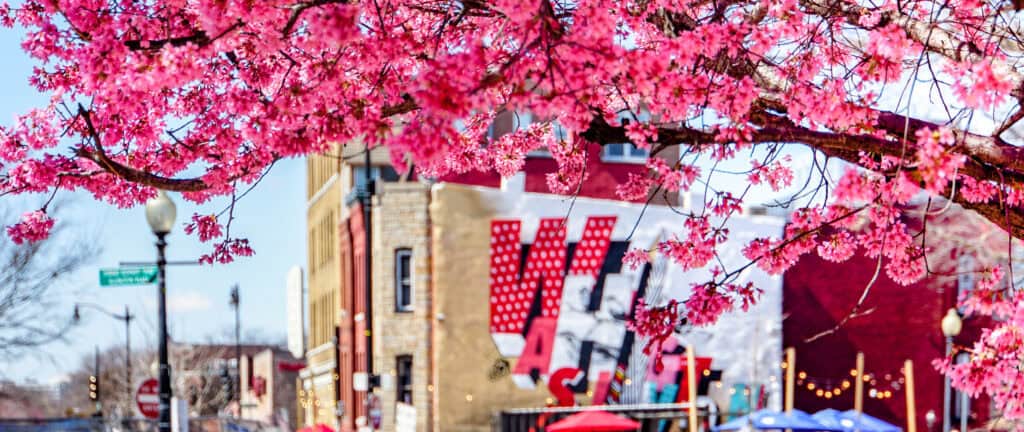
Spring in Washington, DC hits different when 3,000 Japanese cherry trees decide to collectively lose their minds in a blaze of pink and white. And cherry blossom season isn’t just a photo opportunity. It’s four weeks of festivals, parades, and street parties wrapped in one of the most visually dramatic seasonal transformations any American city has to offer.
The 2026 National Cherry Blossom Festival runs March 20 through April 12, coinciding with America’s 250th anniversary celebrations. That means the crowds will be bigger, the energy will be louder, and the floats will be fancier. Plan accordingly.
This guide covers everything LGBTQ+ travelers need to know: when to show up, where to see the blossoms without getting trampled, which festival events are worth your time, and where to find DC’s thriving queer scene once the petals start falling.
Why the Cherry Blossoms Matter (And Why 2026 Is a Big Deal)
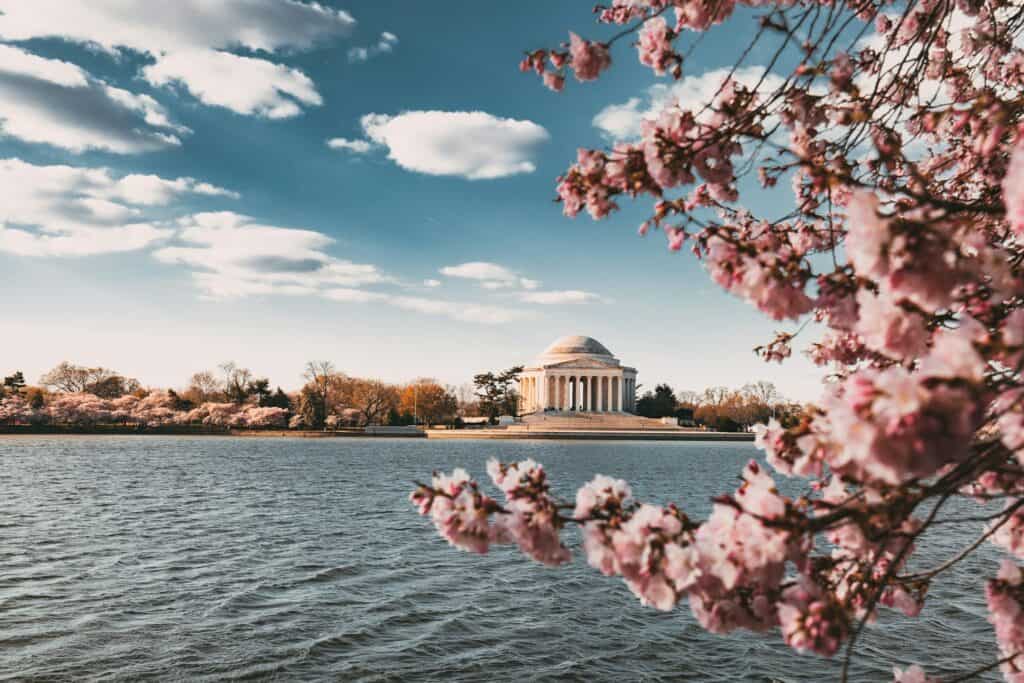
The story starts in 1912, when Tokyo Mayor Yukio Ozaki gifted 3,000 cherry trees to Washington, D.C. as a gesture of friendship between Japan and the United States. What began as a diplomatic goodwill offering has since grown into one of the most celebrated springtime events in the country.
The 2026 DC Cherry Blossom Festival carries extra weight. It runs alongside the DC250 celebrations marking America’s 250th anniversary—which means the city will be operating at full pageantry mode. Think bigger parades, more events, and hotels booked out weeks in advance. If you haven’t locked in accommodation yet, do it now.
Why LGBTQ Travelers Visit the DC Cherry Blossom Festival
Believe it or not, Washington, DC’s cherry blossom season has exploded as a surprisingly queer travel moment. And I’m not just talking about your aunt and her “roommate” finally taking that trip they’ve always talked about.
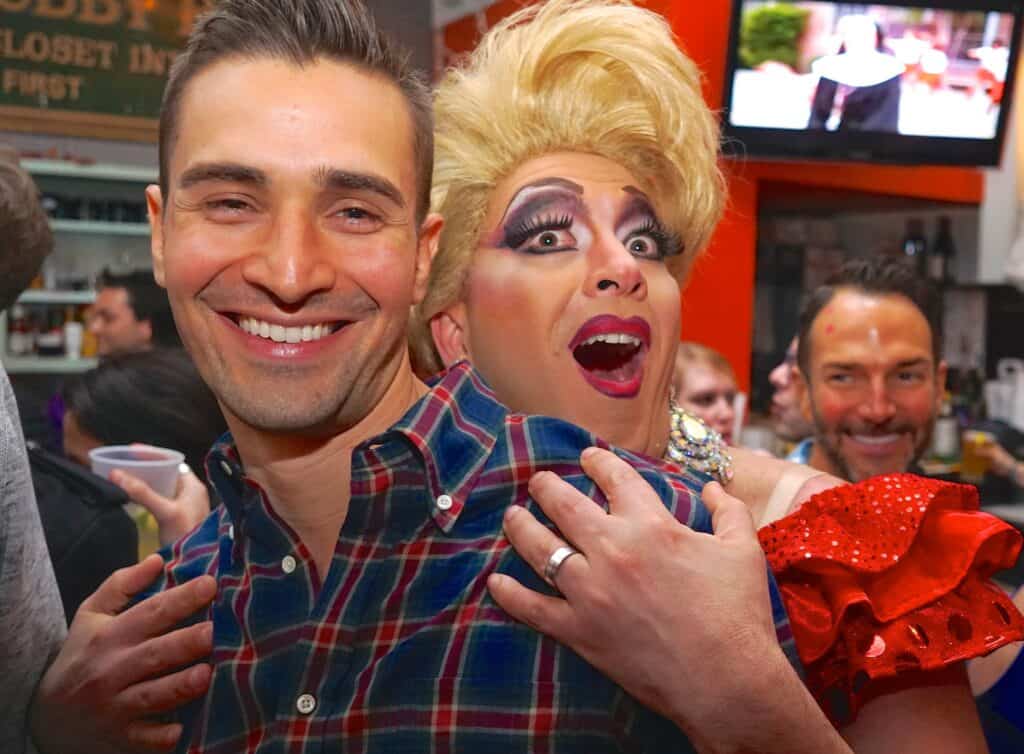
No, the festival itself isn’t a Pride parade, but the timing is just gay enough. Patio season is back, the nightlife scene finally thaws out, and the annual Cherry DC circuit party drops thousands of sweaty gays into the city. Combine that with DC’s legendary, long-standing queer community, and you’ve got a rare chance to mix iconic sightseeing with actual, honest-to-god queer fun. A trip to the nation’s capital that’s actually exciting? Groundbreaking.
When to Visit: Timing Peak Bloom
Timing your trip around peak bloom is the single most important planning decision you’ll make. Here’s what you need to know.
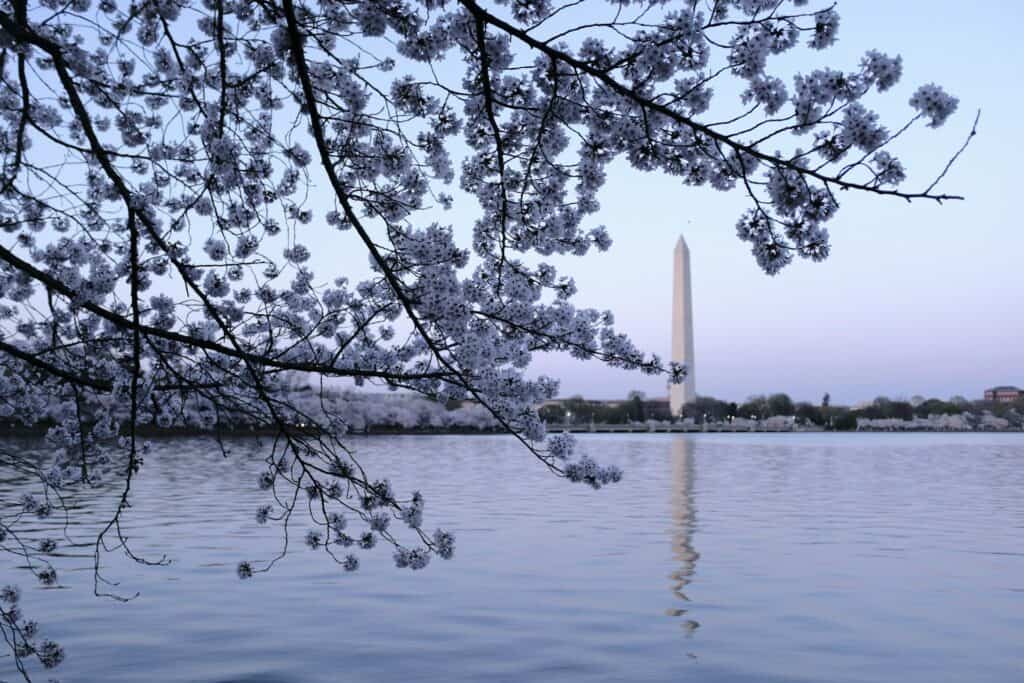
Peak bloom is defined as the day when 70% of the Yoshino cherry blossoms along the Tidal Basin are open. The National Park Service (NPS) monitors bud development and issues official forecasts, though predicting bloom more than 10 days in advance is notoriously difficult—weather can push it earlier or later in any given year.
For 2026, the NPS has projected peak bloom between March 29 and April 1. The window typically lasts several days. Cool, calm weather extends it; wind and rain can end it abruptly.
Practical timing advice:
- Arrive by March 28 if you want to catch peak bloom with certainty
- March 20–27 offers pre-peak blooms with significantly smaller crowds
- April 2–12 is post-peak but still beautiful—and far less chaotic
- Monitor the NPS Bloom Watch page (@NationalMallNPS on Instagram) for real-time bud stage updates
Where to See the Cherry Blossoms
The Tidal Basin is the main event, but it’s also the most crowded. Here’s how to navigate your options.
Tidal Basin
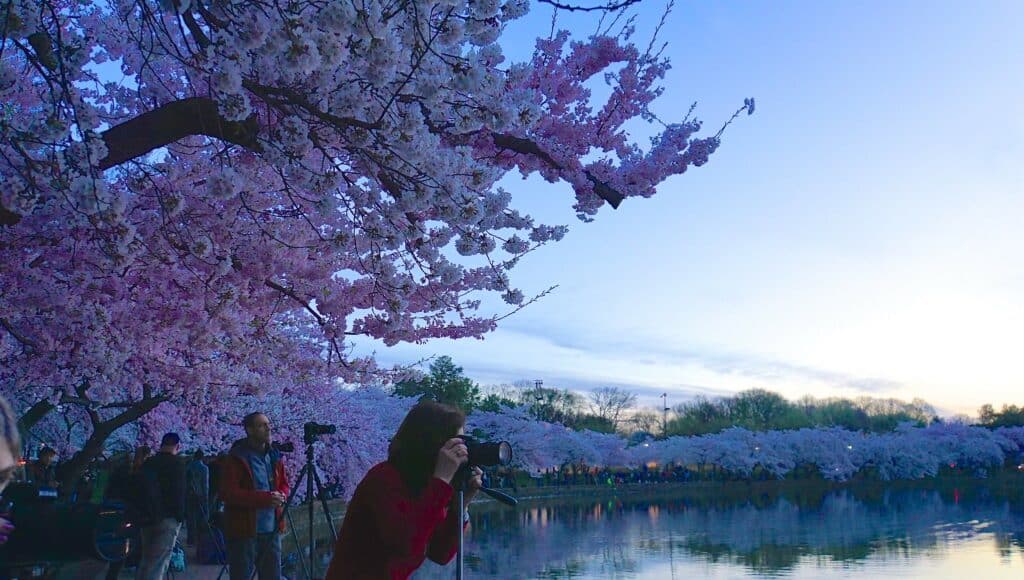
The classic. Around 1,800 Yoshino cherry trees ring the basin, with the Jefferson Memorial providing that signature backdrop. It’s stunning and absolutely packed during peak bloom. Go early—before 8 AM—or catch golden hour in the late afternoon to avoid the thickest crowds. The Tidal Basin Welcome Area at 1501 Maine Avenue SW is the main access point.
Washington Monument Grounds
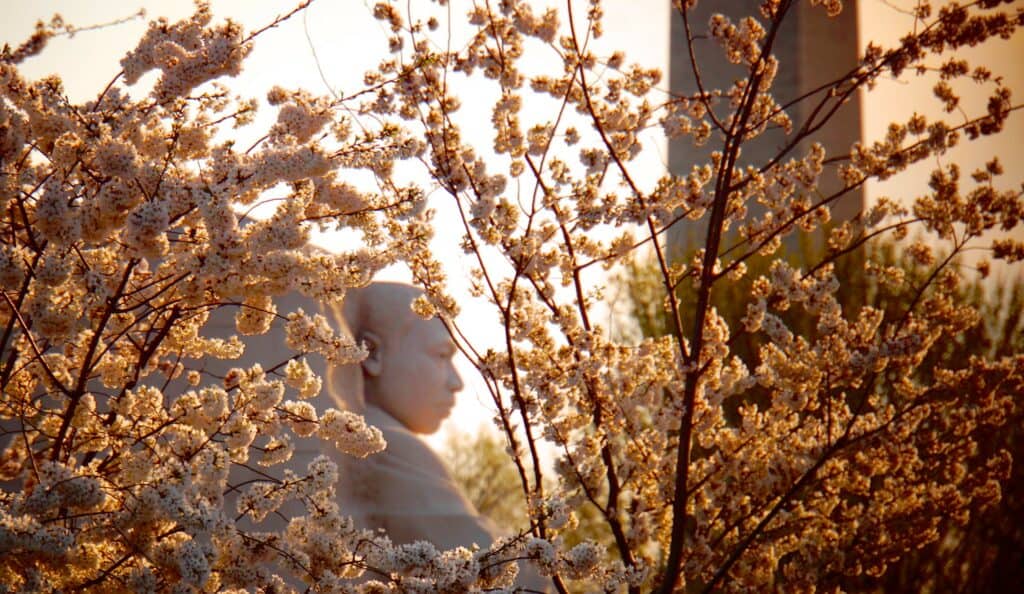
Far less crowded than the Tidal Basin, and the contrast of blossoms against the monument makes for equally striking photos. Worth the short walk from the Metro.
East Potomac Park
Locals know this one. The park has hundreds of additional cherry trees, including a mix of Yoshino and Kwanzan varieties, and it stretches along the Potomac with far fewer visitors than the Tidal Basin. The Kwanzans bloom slightly later, so if you’re visiting after peak bloom, this is your spot.
Kenwood Neighborhood, Bethesda
Just across the Maryland border, the Kenwood neighborhood in Bethesda is lined with over 1,200 Yoshino cherry trees along its residential streets. It’s a genuine secret—quieter, more intimate, and genuinely beautiful. A 20-minute Metro ride from downtown DC.
Martin Luther King, Jr. Memorial
If sunrise photography is your thing, this is the spot. The early morning light hits the blossoms and the Stone of Hope in a way that’s genuinely worth getting out of bed for.
Festival Events Worth Knowing About
The 2026 National Cherry Blossom Festival spans four weeks, with signature events spread throughout. Here are the ones to put in your calendar.
Opening Ceremony — March 21
Held at DAR Constitution Hall, this one-night showcase celebrates the cultural bond between the US and Japan with performances by world-renowned artists. Tickets from $5. It sets the tone for the whole festival.
Blossom Kite Festival — March 28
Free, held on the Washington Monument Grounds, and perfectly timed to coincide with projected peak bloom. Bring a kite, catch the Sakura Taiko Fest performances, pack a picnic. This is the low-key crowd favorite.
BloomFest — March 20
Free festival at the Tidal Basin featuring live performances including Japanese dance, bluegrass, and clogging. A good intro to the festival’s cultural mix.
Petalpalooza — April 4
The Capitol Riverfront block party runs 1–9 PM in Navy Yard and ends with fireworks over the Anacostia River at 8:30 PM. Free, family-friendly, and one of the most fun events in the whole lineup.
National Cherry Blossom Festival Parade — April 11
Constitution Avenue between 7th and 17th Streets, 11 AM–1:30 PM. Floats, marching bands, and the full parade experience. Free to watch from the sidewalk, or grab reserved seating from $45. This closes out the festival on a high note.
Check nationalcherryblossomfestival.org for the full event calendar and ticket links.
Getting There Without Losing Your Mind
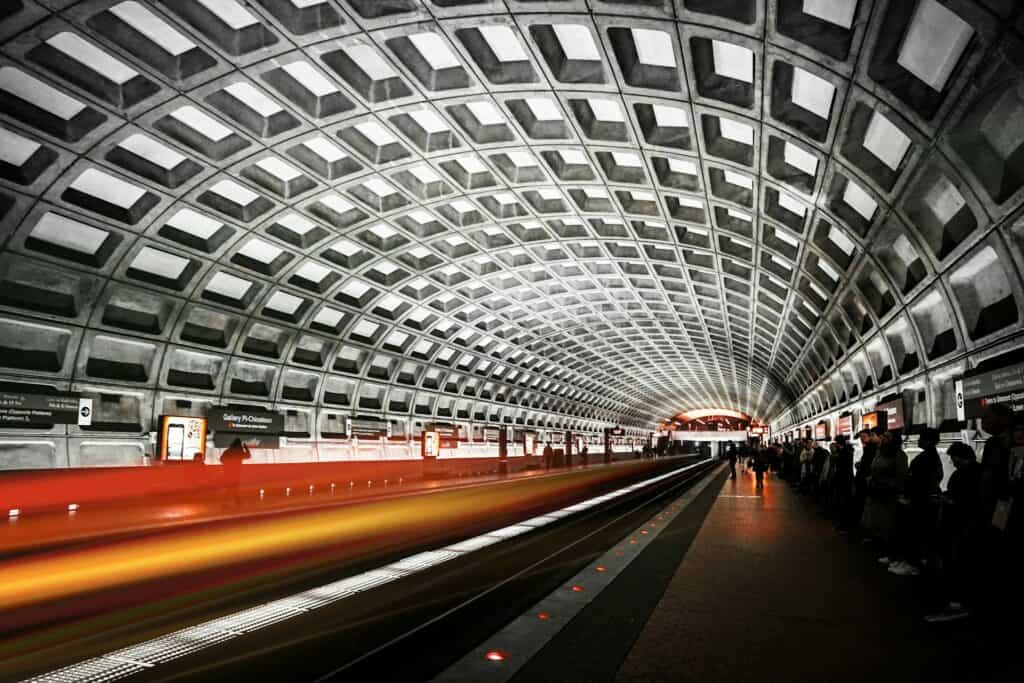
Skip the rideshares during peak weekend—traffic around the Tidal Basin grinds to a halt, and parking is nearly nonexistent. The metro system is your friend.
- Blue, Orange, or Silver Line to the Smithsonian stop, then a 10–15 minute walk to the Tidal Basin
- DC Circulator National Mall route stops near the Jefferson and Martin Luther King, Jr. memorials
- Metrobus Routes 32 and 36 drop you near the Washington Monument, about a 10-minute walk south to the Tidal Basin
- Biking via Capital Bikeshare is genuinely one of the best ways to move around during the festival—faster than walking, and you can park anywhere
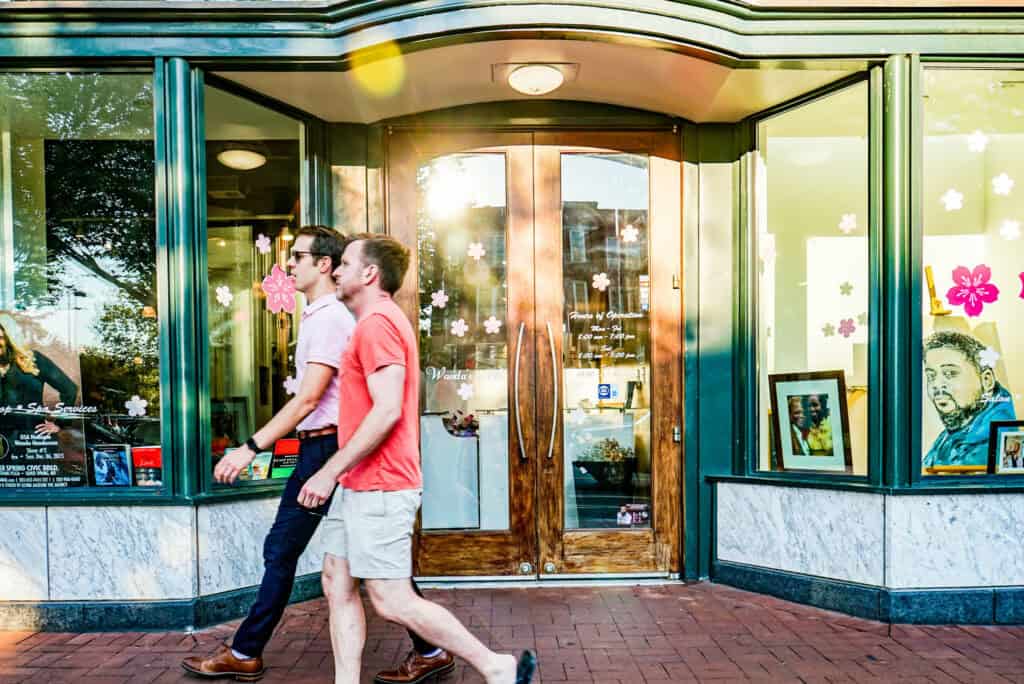
LGBTQ+ DC: The Neighborhoods That Matter
Washington, D.C. has one of the most established and layered queer communities in the country. Here’s where to spend your time.
Dupont Circle
This has been the heart of DC’s LGBTQ+ scene for decades. The neighborhood is walkable, dense with queer-owned and queer-friendly businesses, and home to some of the city’s most iconic bars. It’s also where you’ll find Annie’s Paramount Steakhouse, an institution for decades and reliably welcoming to queer diners. For a nightcap, JR’s Bar & Grill (serving the community since 1986) is the kind of classic neighborhood bar that doesn’t need a theme night to be fun—drag shows, showtunes, and good drink specials most nights of the week.
Logan Circle and U Street Corridor
A few blocks from Dupont, Logan Circle has evolved into one of DC’s most dynamic queer-friendly areas. The U Street Corridor—DC’s historic “Black Broadway”—runs nearby and is packed with bars, restaurants, and live music venues. Trade is the go-to for a more nightclub-adjacent experience, with heavy pours and the kind of crowd that shows up dressed to be seen.
Adams Morgan
The more bohemian, eclectic alternative to Dupont. Adams Morgan has strong LGBTQ+ history, a great bar strip along 18th Street, and a neighborhood character that’s genuinely its own. If you want to explore DC beyond the obvious gay landmarks, this is a good place to wander.
A Note on Shopping
Little District Books is an LGBTQ+-owned independent bookshop worth your time and money. Miss Pixie’s in Adams Morgan is a beloved vintage and consignment shop that’s been a neighborhood staple for years.
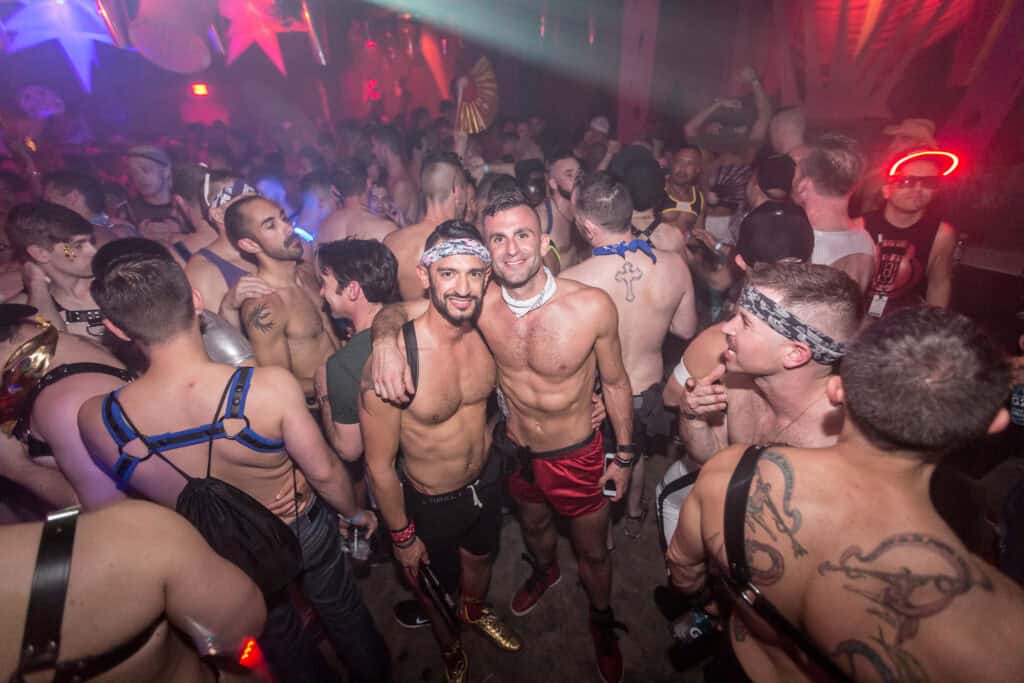
A Word on Cherry DC
Cherry DC is an annual circuit party raising money for HIV/AIDS services and mental health resources. It started during the AIDS epidemic and has been raising money—and hell—ever since. The event typically takes place in mid-April, following the tail end of the festival. At the time of publication, 2026 dates have not yet been announced.
For 2026 dates, themes, and ticket information, check the Cherry Fund directly at cherryfund.org. Events and timing can shift year to year, and you’ll want confirmed details before booking flights around it.
Making the Most of the DC Cherry Blossom Festival as a Queer Traveler
D.C. is one of the most LGBTQ+-friendly cities in the United States. Anti-discrimination protections are strong, the community is visible and active, and the neighborhoods genuinely feel welcoming rather than performatively so.
That said, a few practical notes for the festival period specifically:
- Book accommodation early. Peak bloom weekend and the parade weekend (April 11) are the two busiest stretches. Hotels in Dupont, Logan, and Capitol Hill fill up fast.
- The Tidal Basin is always crowded at peak. If you want the experience without the shoulder-to-shoulder situation, go at sunrise or visit East Potomac Park instead.
- The Smithsonian is free and extraordinary. The National Museum of American History houses the rainbow flag that flew over the Supreme Court during the marriage equality ruling. It’s worth seeing.
- Weather in late March DC is unpredictable. Pack layers. A cold snap can delay bloom; a warm week can push it early. Check the NPS Bloom Watch as your trip approaches.
Spring in Washington, D.C. is one of those experiences that earns its reputation. The blossoms are genuinely as dramatic as advertised, the festival programming gives you real things to do, and the city’s queer neighborhoods offer a nightlife and cultural scene that holds up well beyond the petals. Whether this is your first DC Cherry Blossom Festival or your fifth, 2026’s extra layer of national celebration makes it a particularly good year to show up.
Photos by Ted Eytan used under Flickr Creative Commons and Denis Largeron Photographie for Cherry Fund
RELATED ARTICLES:
Cherry Blossom Wanderlust: 12 American Paradises That’ll Make Your Heart Bloom
About the Author
Blue Monroe is a Los Angeles–based contributor to Fagabond, writing about gay travel through the lens of culture, identity, and lived experience. A drag devotee with a background in digital storytelling, Blue regularly covers LGBTQ+ travel, events, and queer culture with authenticity, humor, and heart.
Learn more about Fagabond and our contributors on our About Us page.