




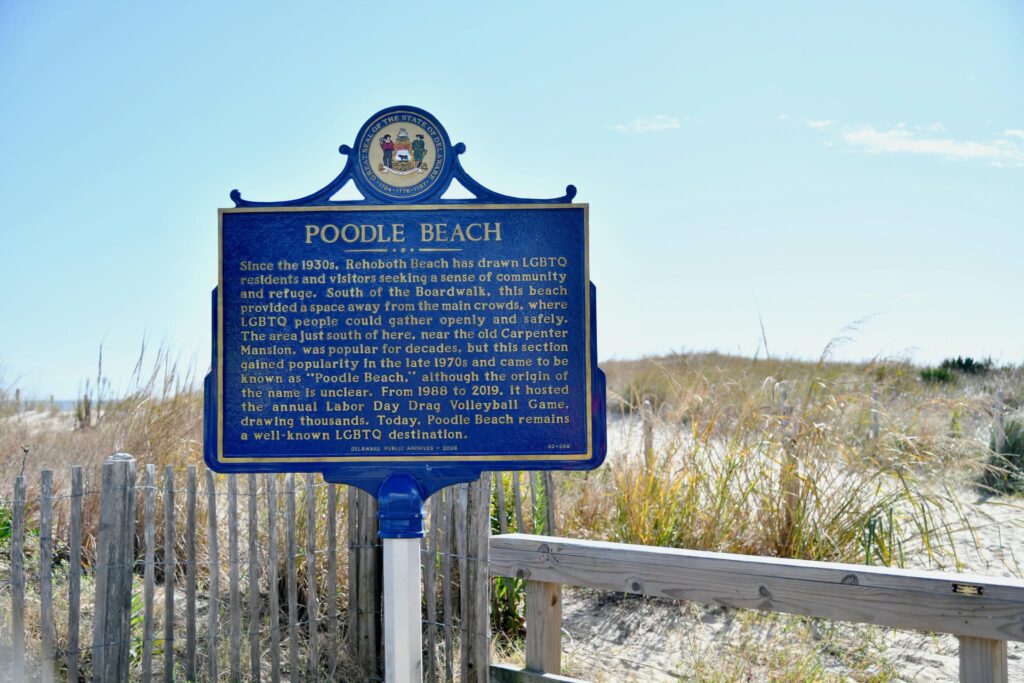
On October 29, 2026, Delaware did something it had never done before. The state put up a historical marker recognizing an LGBTQ+ site, and it chose Poodle Beach, the stretch of sand at the southern tip of Rehoboth Beach that’s been unofficially gay for longer than most of us have been alive. It only took a few generations of sunbathers, friendships, and the occasional game of Labor Day volleyball to make it official.
Here’s the thing: Poodle Beach didn’t need a plaque to be historic. It’s been doing that job on its own for decades. Delaware just finally made it official. But a marker still means something. It means a place where gay people quietly, and sometimes not so quietly, built community now has a permanent, state-sanctioned footnote in the public record.
TL;DR:
- The marker: Delaware unveiled its first state historical marker recognizing an LGBTQ+ site: Poodle Beach, the longtime gay gathering spot at the south end of Rehoboth Beach.
- The roots: Its LGBTQ+ history traces back to Louisa d’Andelot Carpenter and the earlier Carpenter Beach scene.
- The scene today: Poodle Beach remains a popular gathering spot for gay beachgoers, especially in summer.
- The spot: The marker stands near Prospect Street and the South Boardwalk, so go pay your respects (and bring sunscreen).
How Did Poodle Beach Become Rehoboth’s Gay Beach?
Poodle Beach didn’t appear overnight, and no single person founded it. Its story stretches back decades, built gathering by gathering, summer by summer, long before anyone called it by that name.
Before Poodle Beach, There Was Carpenter Beach
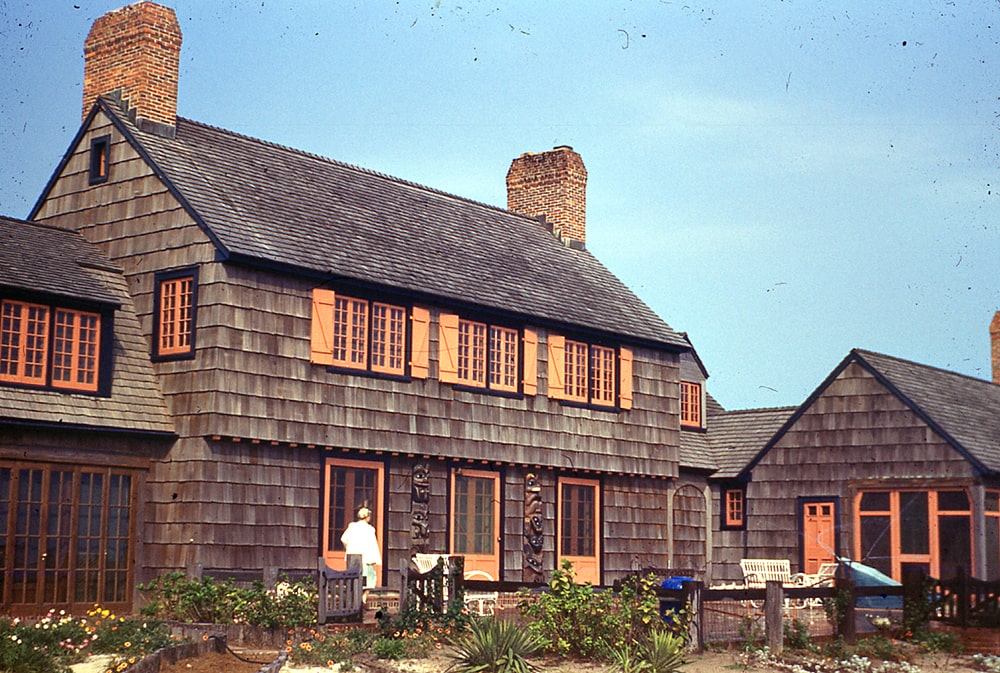
The earlier chapter of this story starts with Louisa d’Andelot Carpenter. Born into the du Pont family fortune, she was the daughter of a top DuPont executive. But she didn’t just coast on the family name. She earned her pilot’s license at a time when women still faced serious barriers in aviation. Money, wings, and zero interest in playing by the rules? Icon behavior.
Carpenter owned an oceanfront property near Dewey Beach called the Shell House, and she used it to host a close-knit circle of friends that included plenty of LGBTQ+ people. The stretch of sand out front came to be known informally as Carpenter Beach. It wasn’t a public beach with a sign and a lifeguard chair. It was a private-ish refuge tied to her and her guests.
Why does that matter? In the mid-20th century, being openly gay could get you arrested, fired, or outed in the local paper. Bars were raided. Public hangouts were risky. Places where queer people could relax, flirt, and be themselves without looking over their shoulders were rare, and they were precious. A beach house with a host who had your back wasn’t just a good time. It was a lifeline.
From Carpenter Beach to Poodle Beach
As the years rolled on, more gay beachgoers made their way north from the Dewey Beach area to the southern end of Rehoboth’s shoreline. By the late 1970s, that gathering place had grown into what we now know as Poodle Beach. Different stretch of sand, same spirit. The party just moved up the coast.
As for where the name “Poodle Beach” actually came from, nobody has a confirmed answer. One local story involves two cousins with poodles who reportedly began gathering farther north along the beach rather than hauling their belongings farther south. Other beachgoers followed, and the name supposedly stuck. Whether that’s exactly how it happened is anyone’s guess, but it’s a good story, and certainly more memorable than a numbered beach access point.
Why Did Delaware Give Poodle Beach a Historical Marker?
Delaware’s October 29, 2026 unveiling gave the state its first historical marker recognizing an LGBTQ+ site, and honestly, it’s about time. The marker didn’t just fall out of the sky, either. Frank Cooper applied for it in 2020, helping launch the community effort to get Poodle Beach’s history formally recognized.
What sets this marker apart from your standard “famous person slept here” plaque is what it celebrates: everyday social history. Most historical markers honor individuals, political milestones, or institutions. This one recognizes something harder to pin to a single date, a place where ordinary LGBTQ+ people gathered, socialized, and built community over decades. The marker just makes that history a little harder to walk past without noticing.

What Makes Poodle Beach More Than Just Another Gay Beach?
A gay beach is never really about the sand. It’s about who’s on it. For decades, Poodle Beach served as one of the few spaces where LGBTQ+ people could socialize openly, especially during eras when that kind of visibility wasn’t an option everywhere else. That mattered in ways that went beyond a good tan.
Over the years, Poodle Beach developed its own rituals, most notably the Labor Day Drag Volleyball tradition, which turned an ordinary end-of-summer weekend into something visitors planned their calendars around. Familiar faces returning year after year helped turn a stretch of public sand into something closer to a reunion.

Where Is Poodle Beach, and What Should Visitors Expect Today?
If you’re planning a trip, the practical details matter as much as the backstory.
Finding Poodle Beach and Its Historical Marker
Poodle Beach sits toward the southern end of Rehoboth Beach, near the Prospect Street area. The new historical marker is located at Prospect Street and the South Boardwalk, according to the official announcement. The beach itself is public, so you can visit the marker and the beach independently, no tour group or scheduled event required.
When to Visit Poodle Beach
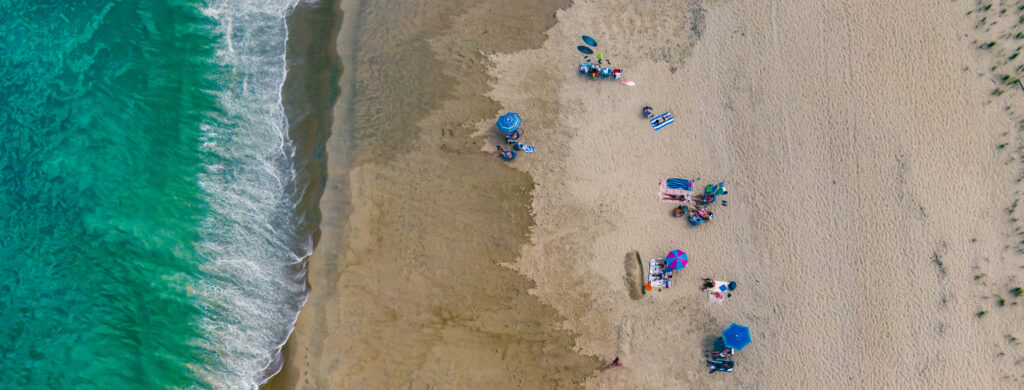
Summer weekends are the main event. Think packed towels, umbrellas planted shoulder to shoulder, music drifting down the shore, and weekend warriors from Philly and D.C. treating the sand like a very large, very sunburned living room. It’s social, flirty, and loud in the best way, and you’ll want to arrive early if you care about your spot.
The off-season is another story entirely. Cooler months bring quiet sand, a slow stroll along the boardwalk, and plenty of room to actually read the marker without dodging a volleyball. It’s less party, more reflection, and just as worthwhile.
A Little History With Your Beach Day
The historical marker helps preserve Poodle Beach’s place in LGBTQ+ history, but the beach itself isn’t a museum exhibit. It’s still a living, breathing part of Rehoboth’s gay scene, sand and all.
So go ahead and read the plaque. Then go lie down near it. Both activities are historically appropriate. If you’re mapping out the rest of your trip, our Rehoboth Beach city guide has you covered for everything else the town has to offer.
Photos by Flickr users Yawper and Ted Eytan used under the Creative Commons Attribution license and courtesy of The Division of Historical and Cultural Affairs for Delaware
About the Author
Blue Monroe is a Los Angeles–based contributor to Fagabond, writing about gay travel through the lens of culture, identity, and lived experience. A drag devotee with a background in digital storytelling, Blue regularly covers LGBTQ+ travel, events, and queer culture with authenticity, humor, and heart.
Learn more about Fagabond and our contributors on our About Us page.